About the farm
Sanborn Mills Farm is a nonprofit working farm and craft school in Loudon, New Hampshire. On a historic campus of water-powered mills, timber-framed barns, gardens, and studios, we teach traditional crafts and farming methods by practicing them. The campus itself is the result of historic building restoration that Colin and Paula Cabot began in 1996: the farm has restored the Sanborn family's mills, dams, and barns, and saved old buildings from other towns by moving them to the farm. Materials are grown, harvested, and milled here and then made into objects, so the farm's history is put to use rather than kept on display.
The farm, piece by piece
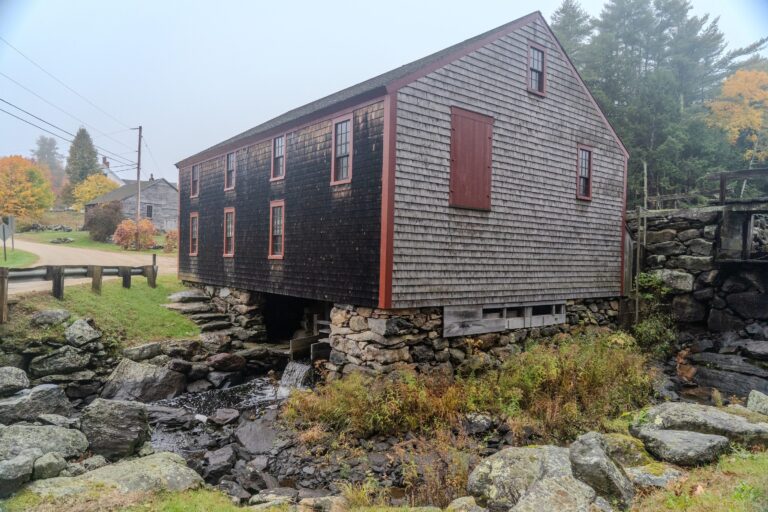 Grist mill and sawmillWater-powered, restored, and running. Custom milling and lumber.
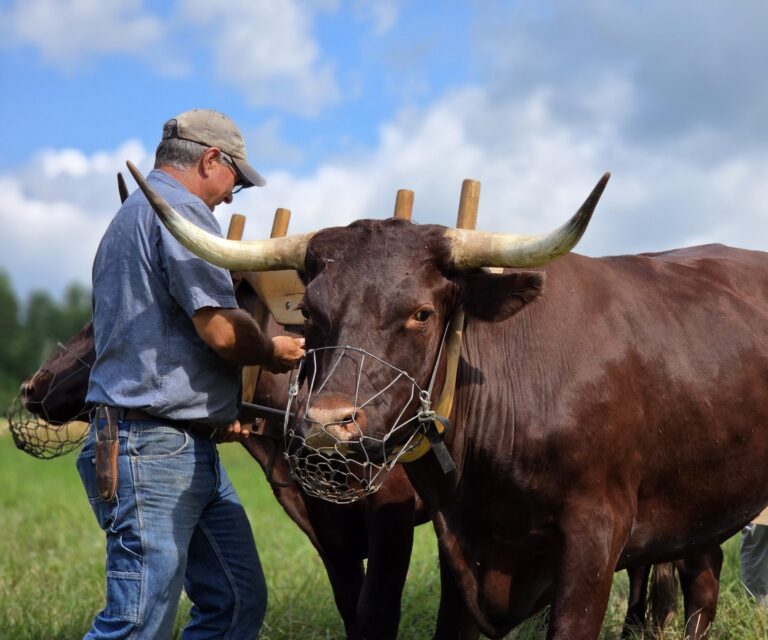
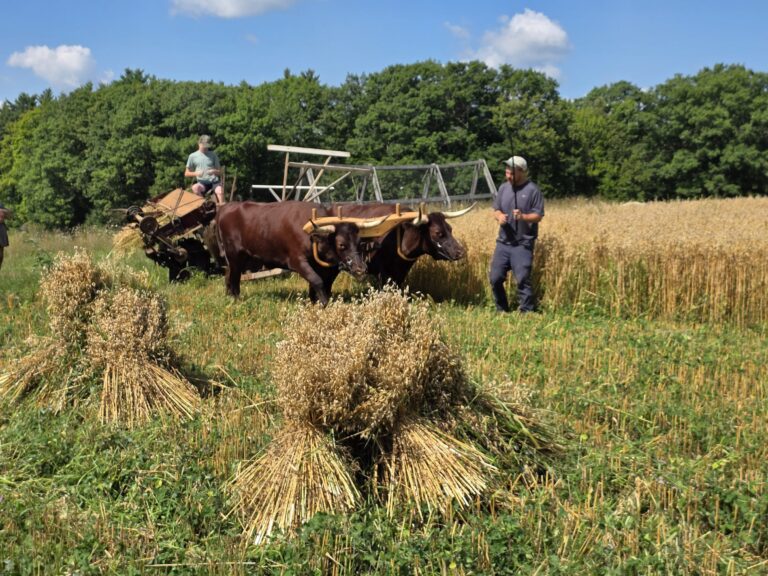 Fields, oxen, and forestDraft animals, livestock, and the working forest around the farm.
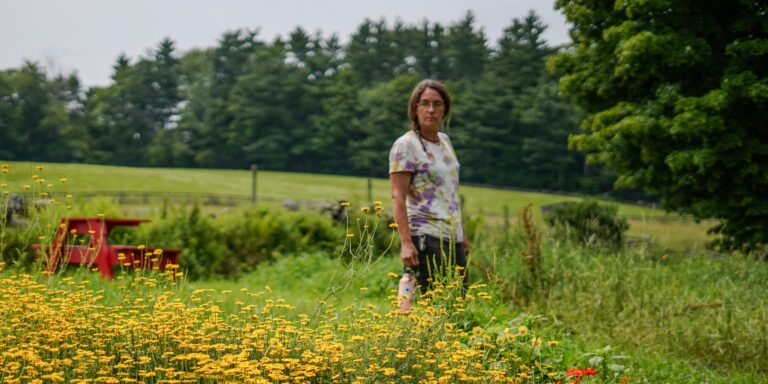 Gardens and greenhouseKitchen, dye, teaching, and ornamental gardens, and the 1919 greenhouse.
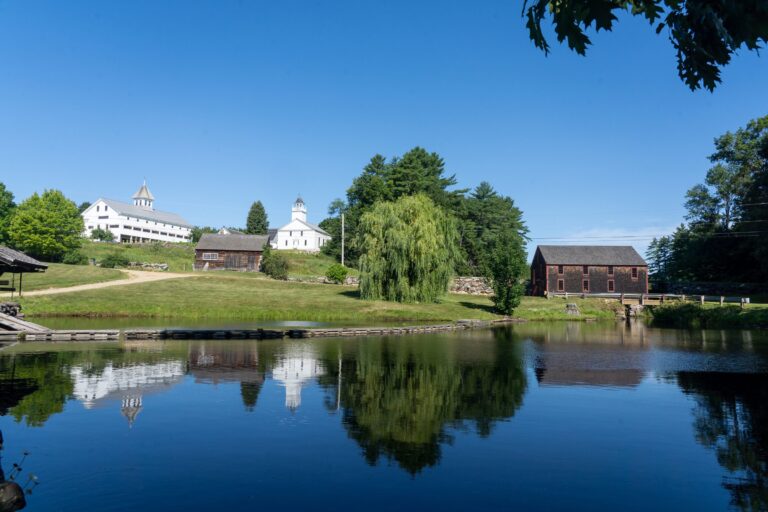 Buildings and mapEvery barn, shop, and studio, with the interactive campus map.
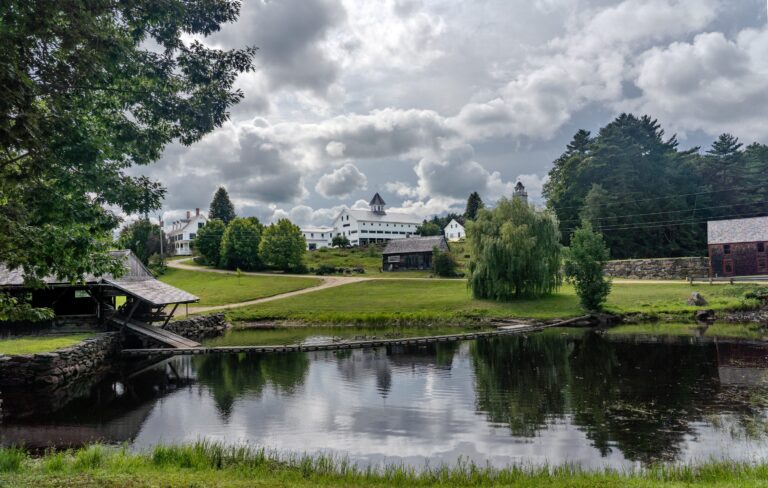 History of the farmFrom the Sanborn family to the restoration of the mills.
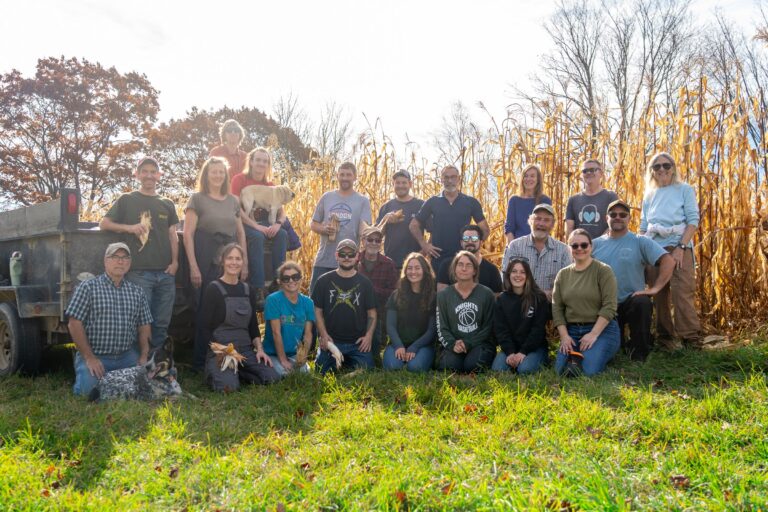 Staff and boardThe people who run the farm, the kitchen, the mills, and the program.
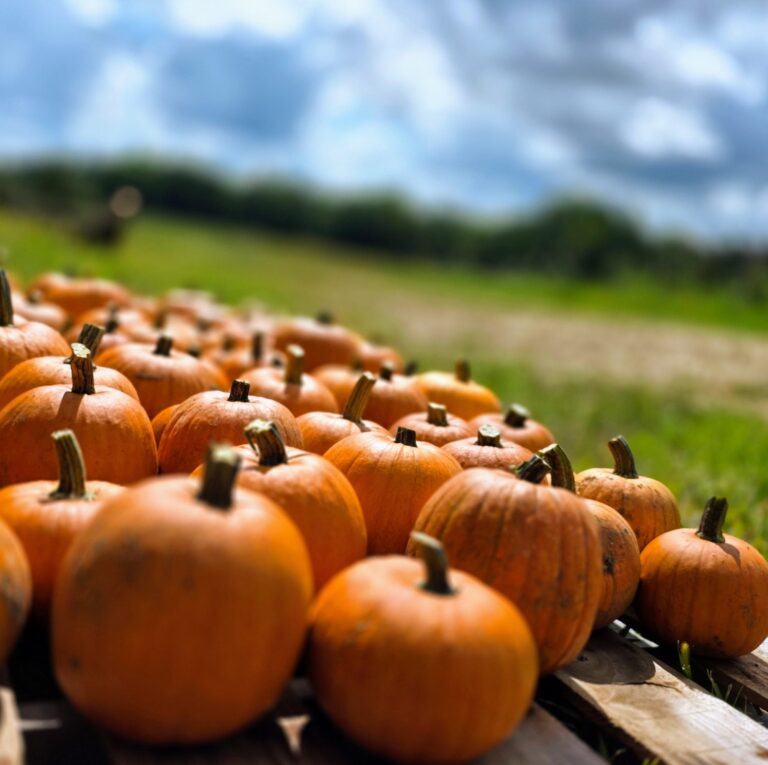 Shop the farmSeasonal shares, food and flowers, lumber, and gift certificates.
 Work at the farmOpen jobs on the farm, in the mills, in the kitchen, and in the office.
We are not a museum. We are a place where work is the archive and use is preservation.
What guides the work
Mission
Sanborn Mills Farm’s mission is to teach traditional crafts and farming methods while sustainably using its field and forest resources for its workshops and events.
Vision
Sanborn Mills Farm is a center for the renewal of the human spirit, a place to cultivate creativity and joy, and an anchor for our individual, collective, and shared experiences. Sanborn Mills Farm expands its traditional farming practices, including draft animal power, growing fruits, vegetables, animals, grains, trees, ornamental gardens, fiber, and other materials for use in making things. Remaining rooted in regenerative practices our products are used in our community. Sanborn Mills Farm teaches traditional crafts, farming with draft animals, and animal husbandry and the skills need to repair, maintain and run water-powered mills and is guided by a desire to achieve perfection through what can be accomplished by working with one’s hands.
Values
- Honor the past by understanding and investing in the site
- Preserve our cultural heritage
- Provide a road less traveled that includes a working connection to the land as an alternate career path
- Respect animals for the work they do and the food they provide and embrace the obligations and responsibilities of care that partnering with animals entails
- Aspire to mastery of craft
- Respect differences among people without assigning values
- All people deserve a good, healthy life
Land acknowledgement
Sanborn Mills Farm is located on N’dakinna, which is the traditional ancestral homeland of the Abenaki, Pennacook and Wabanaki Peoples past and present. We acknowledge and honor with gratitude the land and waterways and the alnobak (people) who have stewarded N’dakinna throughout the generations.
Diversity, equity, and inclusion
In creating a community of craft and traditional farming enthusiasts we want to ensure that all people regardless of appearance, gender, race, ethnicity, religion, sexual orientation, age, economic status or ability feel welcome and respected when at the farm.
We believe that there is inherent value in a diverse community and remain committed to expanding our offerings to communities that are currently underrepresented at the farm. This includes Black, Indigenous, People of Color (BIPOC) and people from the LGBTQ community. We will continue to work towards a more inclusive environment both by attending trainings and through self-education.
Staff and board
Staff
-
Mike MollaExecutive Director
-
Mary WitschonkeCFO, Business and Administrative Manager
-
Joe PoissonDirector of Operations
I came to Sanborn Mills Farm as a subcontractor, installing the hardwood floor in the great room addition, renovating the guest rooms, and building cabinetry with the lead carpenter. I stayed because I care about things made well enough to outlast me. Measure twice, cut once. That is as close as I get to a philosophy, and it works as well in operations as it does in the shop.
In a past life I was a professionally trained chef and a fine-dining manager. Arthritis ended the skiing and the hard hiking, though I still get to the mountains when I can, and there is a pond behind the house with enough wildlife to keep me busy. The other constants are the Stanley Cup playoffs and a well-crafted IPA.
-
Ray RamseyFarm Manager
I was raised on a 180-acre farm in Indiana, and agriculture has always been part of who I am. My father's antique tractors sparked my lifelong interest in vintage farm machinery. The first time I visited Sanborn Mills Farm, at an open house, I thought, "I gotta work there," and I joined the team in 2016 to build up the working farm, especially the grains. Outside work, I show working animals at fairs, compete in pulling events, and study the history of draft animals and early machinery.
-
Marsha GrizwinProgram Manager
I was drawn to Sanborn Mills Farm for the opportunity to support traditional craft and heritage farming education, and arrived with broad experience in the commercial textile arena for brands and soft goods surface design work at an international design consultancy. My work at the farm is a direct reflection of what I care about: living history, handmade objects that bring beauty and function to daily life, and knowledge that's worth preserving. I've returned to New England after several decades away, and I'm at home again in a place with four distinct seasons. I believe the best things in life are free: nature hikes, art making, gardening, a good book, and the company of people close to me.
-
Karen KenneyRegistrar and Guest Relations
I found Sanborn Mills Farm when I was ready for a change after more than twenty years in customer service and administration. My family and I took a ride through the farm in the middle of winter, and I still get that same feeling every time I drive in. As Registrar, I record hundreds of registrations each season and love welcoming students at check-in, whether it's their first workshop or their tenth. At home, I keep a small farm of my own with sheep, goats, chickens, ducks, rabbits, and three dogs.
-
Patrick SlavenManager of Communications & External Affairs
I joined Sanborn Mills Farm in the summer of 2026, but the path here started on my grandparents' ten-acre homestead in Ojai, California, watching my grandfather Bennie restore classic cars by hand and build the family home himself. Before the farm, I worked in marketing and strategy for the New Hampshire Fisher Cats, Manchester Distillery, and Ratio Christi. My wife and I moved to New Hampshire in 2018 and are still restoring our home in Hopkinton. I believe, as Mike Molla says, that the work is the archive.
-
Kelly FaheyHead Chef and Dining Services Manager
I applied for a farm-to-table chef job thinking it was in Maine. It turned out to be thirty-five minutes from home, and the moment I drove onto the property in the dead of winter, I knew I wanted to be here. I plan the menus each week around who is coming and what the farm has ready, and most everything is made from scratch. Five seasons in, I'm still perfecting my bread. Off the clock, I'm with my wife and our dog, making art, or playing my ukulele.
-
Brian CloughMills & Land Division Manager
I worked for Steve Fifield doing timber-frame restoration, and I grew up in a sawmill and around logging, so the love of that work was already there. Steve is the biggest mentor I have had. These days I run the water-powered sawmill and the water-powered gristmill, and I do the millwrighting that keeps them going, from the gearing to rebuilding turbines and water wheels.
What I like is seeing a tree and knowing what it can be made into, especially the timbers, from felling to sawing. Chainsaws are among my favorite tools. My hands have been on the timber-frame restoration of the buildings, on new structures, and on a large share of the stone walls. I grew up on a small farm where we raised our own food, from the vegetables to the animals. I hope a visitor leaves with some sense of how these mills supported the community, and of how much the work still takes.
-
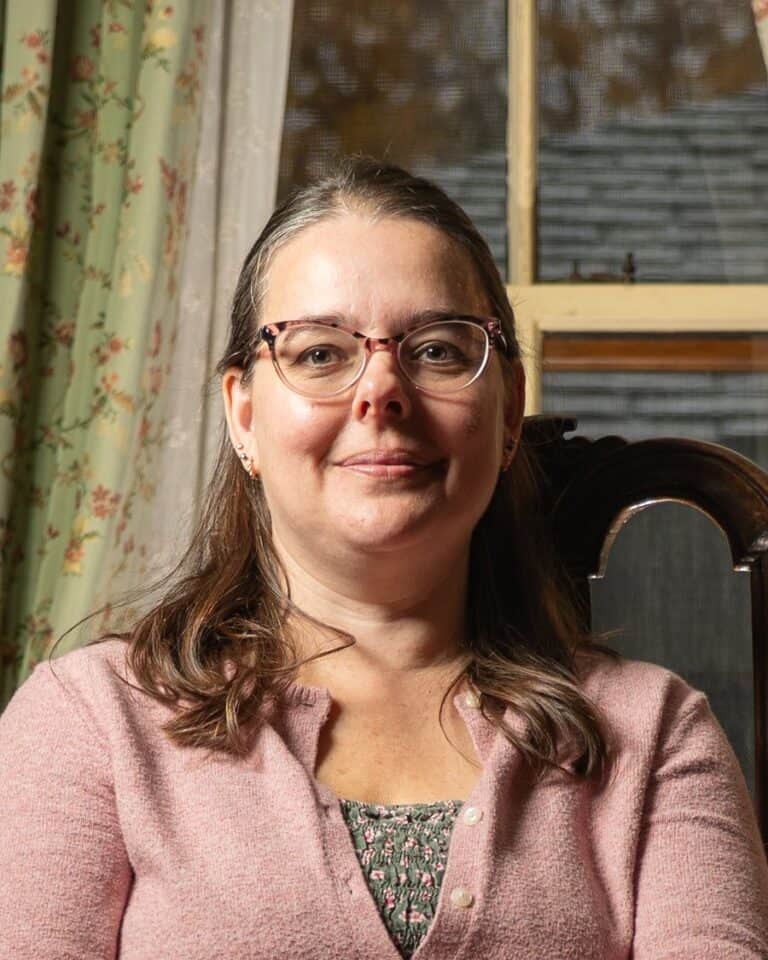
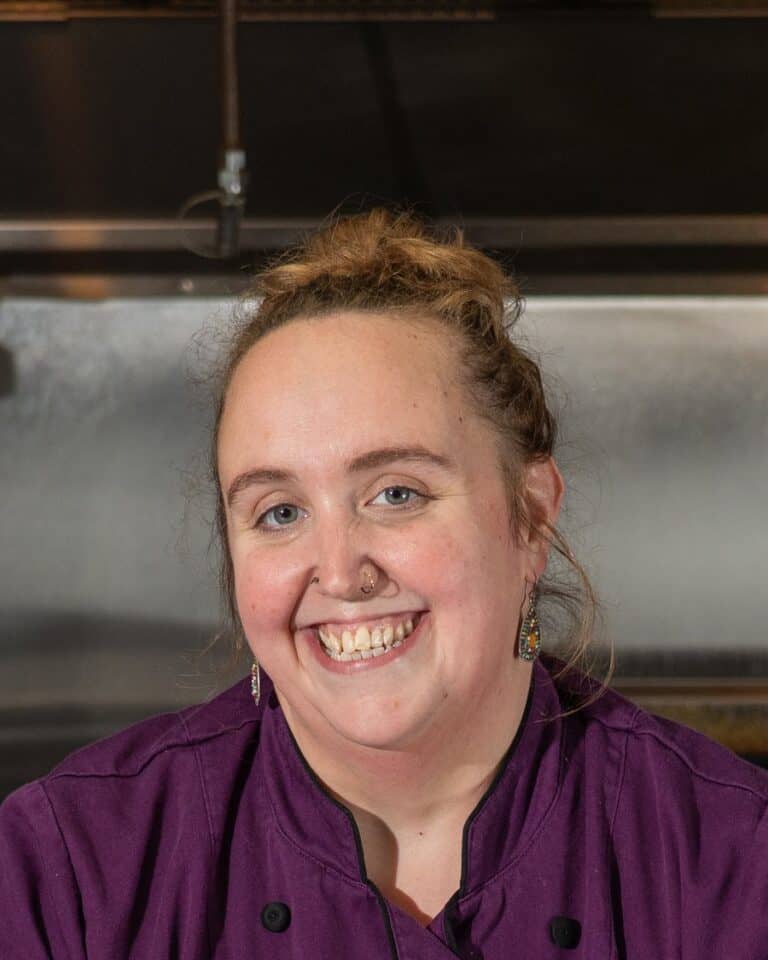
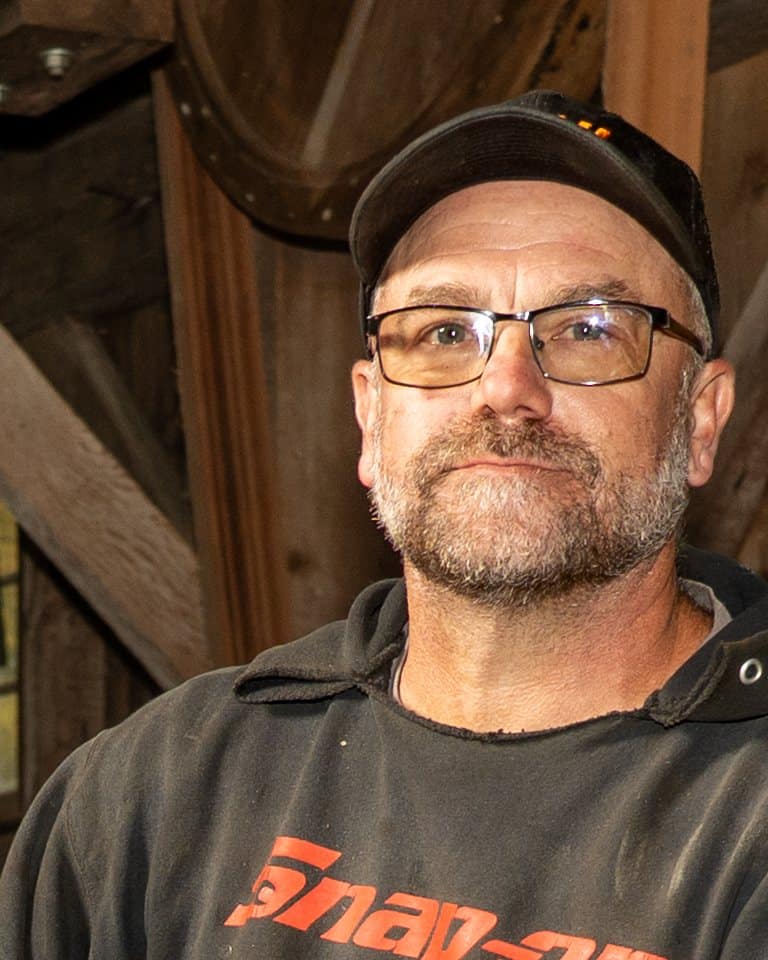
Nick ParadisStudio Manager
Board of Directors
- Kathy Bogle-Shields Chair
- Elizabeth Durfee Hengen Vice Chair
- Colin Cabot Treasurer
- Ben Wilson Secretary
- Paula Cabot
- Lynne Emerson Monroe
- Galen Beale
- Teresa Rosenberger
- Jennifer Goodman Ad hoc
Colin and Paula Cabot bought the farm from the Sanborn family in 1996, later gave it to the nonprofit, and remain its founders.
Be part of the work
Give
Gifts keep the mills turning, support the teaching and the land, and help start a scholarship fund.